


Key Takeaways
- Myopia means close objects look clear, but distant ones appear blurry.
- Genetics and lifestyle factors both play a role in its development.
- Myopia most often starts in childhood and may progress through the teen years.
- More time outdoors can support eye health.
- Regular eye exams help catch changes early.
If your child was recently diagnosed with nearsightedness, also called myopia, you may be wondering what caused it. It’s a common question, and our team at Eye On Health is here to help your family understand what it is, what causes it, and how to manage its progression.
Myopia most often develops when the eye grows too long from front to back, causing light to land in front of the retina instead of directly on it, which makes distant objects appear blurry while close-up vision stays clear. If your eye doctor diagnoses myopia in your child, they can recommend a myopia control method to help slow progression and protect their long-term vision health.
What Is Myopia?
Myopia, also known as nearsightedness, is a vision condition in which distant objects are blurry while close-up ones remain clear. Picture trying to read a sign across a parking lot and seeing only a blurry shape, while the book in your lap is perfectly clear. That contrast is what myopia feels like day to day.
Myopia most often happens when the eye grows too long from front to back, called axial elongation. When light enters the eye, it’s supposed to land directly on the retina, the light-sensitive tissue at the back of your eye. But if your child has myopia, that elongated shape means that light lands just in front of the retina, resulting in a blurry view of anything far away.
In some children, this type of eye growth can continue as they age, resulting in a higher prescription. Myopia management aims to slow how quickly your child’s prescription increases as their eyes grow.
The Main Causes of Myopia
Genetics and Family History
Myopia has a genetic component. That means that if one parent is nearsighted, there’s a higher chance their child will be too. That chance increases further when both parents have myopia. It doesn’t mean nearsightedness is guaranteed, but family history is one of the strongest factors an optometrist looks at when assessing a child’s risk.
Lifestyle and Environmental Factors
A lot of close-up work, whether it’s reading, doing schoolwork, or looking at screens for extended periods, is associated with a higher risk of myopia development. On the flip side, time spent outdoors appears to have a protective effect, and children who get regular outdoor time tend to show lower rates of myopia.
Signs You or Your Child May Have Myopia
Common Symptoms to Watch For
Myopia doesn’t always announce itself clearly. Some people don’t realize their distance vision has changed because they’ve adapted gradually. Here are a few signs worth paying attention to:
- Blurry vision when looking at distant objects, like road signs or whiteboards.
- Frequent squinting or recurring headaches, especially after looking at something in the distance.
- Eye strain following activities that rely on distance vision.

Signs to Watch for in Kids
Children often don’t know their vision has changed because they have no baseline to compare it to. That’s why parents play such an important role in spotting the signs. If you notice any of these behaviors, it could be a good idea to bring them in for an eye exam:
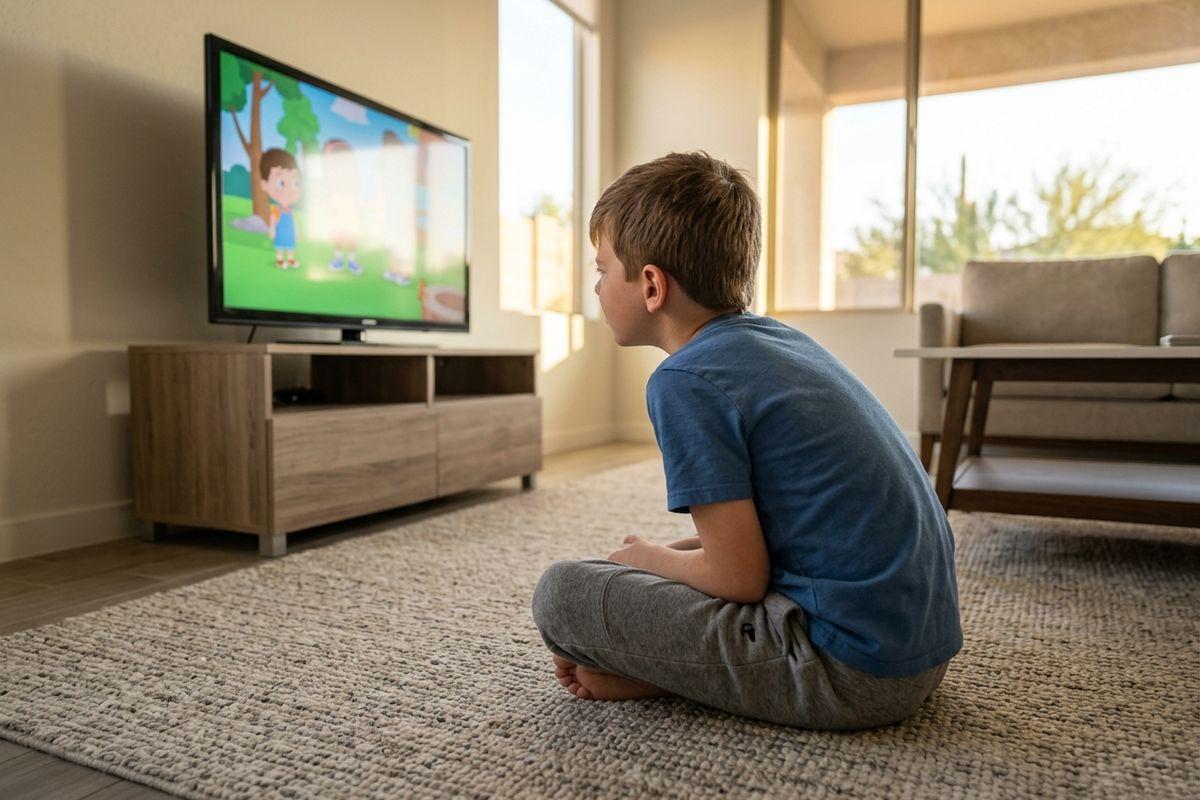
- Sitting very close to the TV or holding devices right up to their face.
- Struggling to see the board at school or falling behind in ways that seem tied to vision.
- Rubbing their eyes or blinking more than usual during or after visual tasks.
How Myopia Develops Over Time
When It Typically Starts
Myopia most often appears during the school-age years and can continue to progress through adolescence. Children whose myopia begins earlier tend to be at higher risk of reaching what’s called high myopia by adulthood, where the prescription becomes significantly stronger. That’s why catching it early matters.
Projections suggest myopia rates will continue rising globally, which makes routine pediatric eye exams an important part of your child’s care.
Are You Born with It?
Myopia can be present from birth, but it more commonly develops during childhood. It often begins during the school-age years and may continue to progress through the teen years and sometimes into early adulthood. For many people, myopia eventually stabilizes as the eyes finish growing, but the timing varies from person to person.
Ways to Support Eye Health
No one can promise myopia won’t develop or progress, but you can take steps to support long-term eye health for your whole family. Getting outside more and reducing long, unbroken stretches of screen time are 2 habits that can make a real difference, especially for kids.
Regular eye exams help your optometrist catch changes early, update your prescription, and track progression. If myopia is already present, an optometrist can also walk you through myopia management options, which aim to slow how quickly the prescription changes over time.
Schedule an Eye Exam
At Eye On Health in Phoenix, our team works with patients of all ages to monitor vision changes and talk through options that fit each person’s needs. If you’ve noticed any of the signs above in yourself or your child, scheduling an eye exam is a straightforward next step.