


Key Takeaways
- Your prescription transfers directly from exam to lab, reducing the risk of manual entry errors.
- In-person measurements account for how frames actually sit on your face.
- Lens materials and coatings are matched to your prescription and daily routine.
- Adjustments and repairs stay close by with a team that already knows your history.
- Families get consistent care in 1 place, including support for kids with changing prescriptions.
You’ve just had your eye exam at Eye On Health. Now you’re weighing your options for glasses. Online retailers look convenient, and budget frames at the pharmacy seem easy. But there’s a real difference between buying glasses somewhere and buying them from the optometrist who just examined your eyes.
Buying glasses from your optometrist keeps your prescription, measurements, and ongoing care connected in 1 place, which can make a meaningful difference in how your glasses actually perform.
1. Your Prescription Goes Straight from the Eye Exam to the Lab
When you buy glasses directly through the practice that examined your eyes, your prescription moves from the exam to the lab without you typing a single number. That matters more than it sounds.
One wrong digit in a prescription changes how the lens bends light. For stronger prescriptions, that margin gets even tighter. A small error that causes mild blurring in a mild prescription can cause real disorientation in a strong one. Keeping the process in one place removes a step where mistakes can happen.
2. In-Person Fitting and Measurements
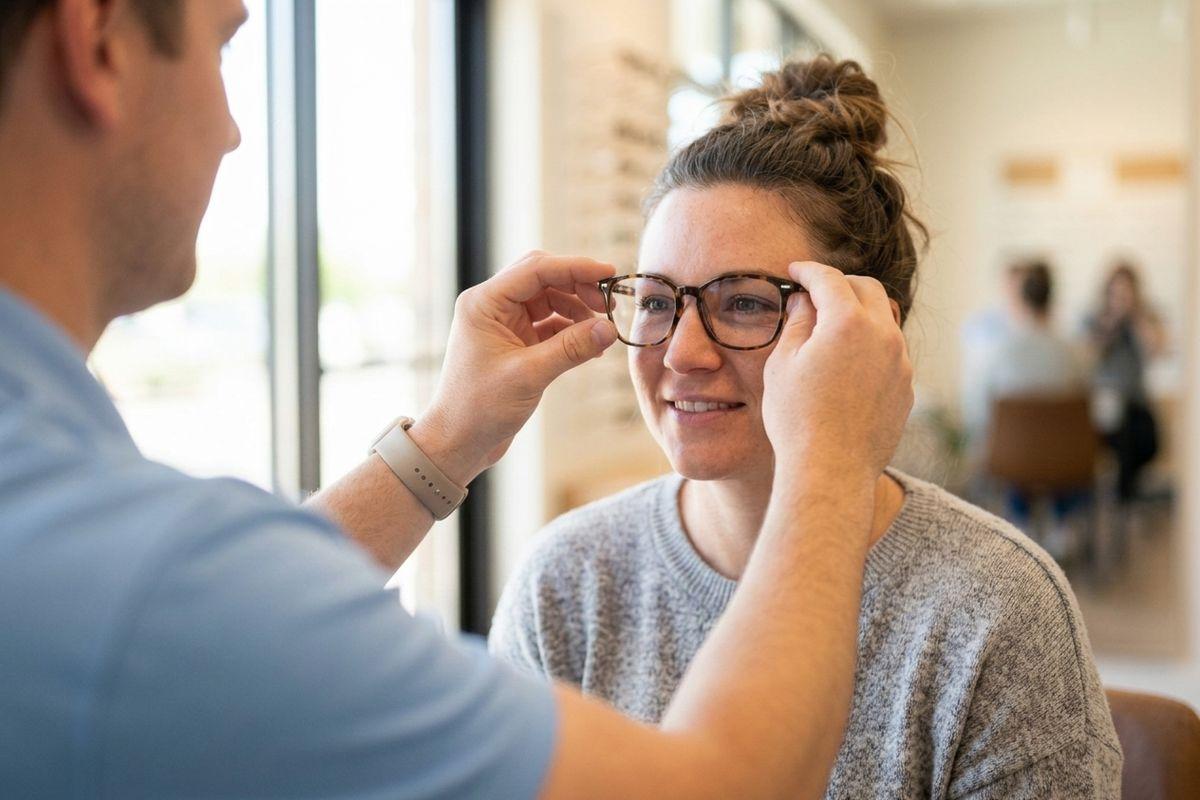
Your pupillary distance (PD) is the measurement between your pupils, and it’s important to make sure you can see clearly and comfortably through your glasses. For many people, each eye sits at a slightly different distance from the center of the nose, and we measure that separately for distance and near vision. We record those numbers with you sitting in your chosen frame, so you know your glasses are made for your specific needs.
Frame tilt, lens position, and wrap angle all affect how clearly you see through the finished glasses. The optical center of each lens needs to land exactly where your eye sits, and that happens most accurately with in-person measurements.
Signs Your Glasses Don’t Fit Right
If your glasses weren’t fitted properly, it can affect how they feel throughout the day. If you notice any of these signs, it may be time for a glasses adjustment:
- Eye strain or tired eyes by mid-afternoon.
- Headaches or an off-balance feeling when you move your head.
- Pressure marks or redness at your nose or temples.
3. Lens Options Are Matched to Your Needs
Not every lens works the same way in every prescription. Coatings like anti-reflective treatment and UV protection change how your glasses hold up through a full day of screen time, driving, or time outside.
Multifocal lenses are especially sensitive to placement. They need to be positioned precisely relative to your eye, which is something an optometrist’s optical team can measure and verify in person. If you spend long hours in front of a screen, pairing the right lenses with good habits, like the 20-20-20 rule, can help reduce daily eye strain.
Frames That Work for Your Routine
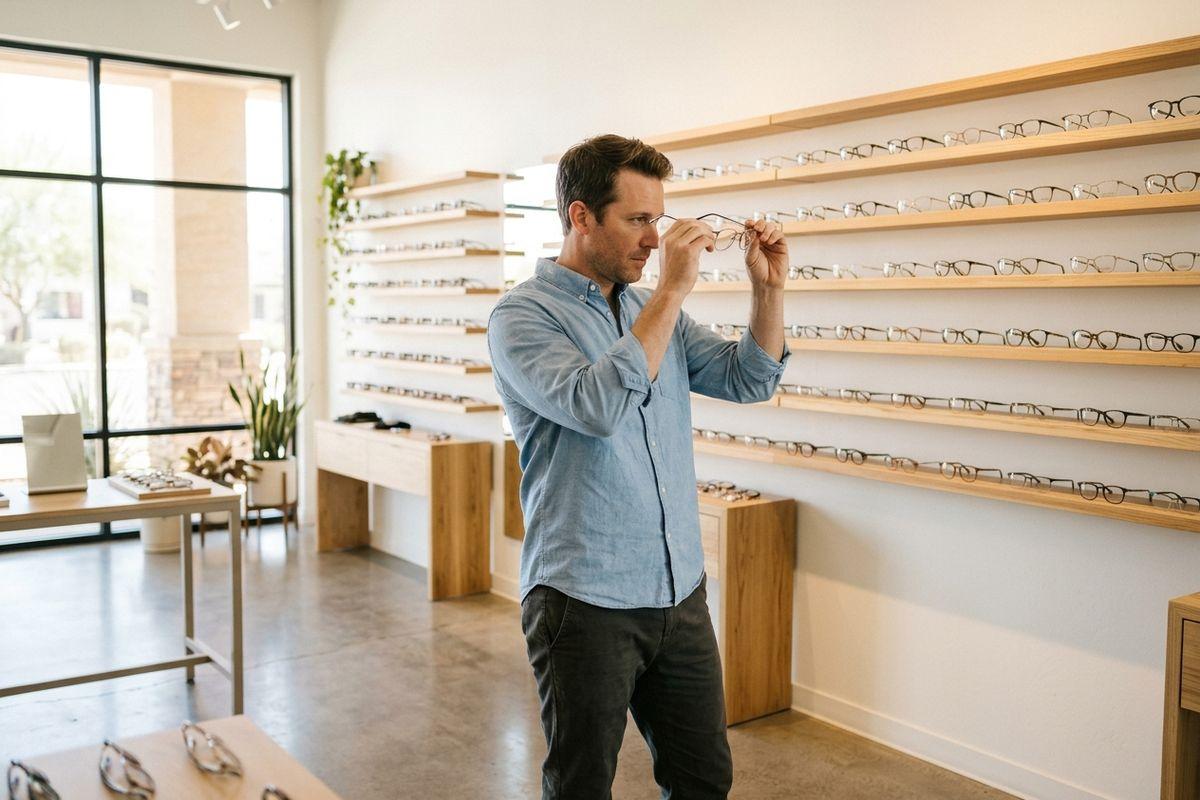
The frame you wear for desk work isn’t always the right choice for long drives or physical activity. Bridge width and temple length affect how glasses feel after several hours, not just when you first put them on. Before you leave, our team checks that the fit feels right and the frame sits where it needs to.
4. Follow-Up Care and Adjustments
You’ll likely wear your glasses every day, and that means a lot can change. Things shift, hinges loosen, and nose pads can move. When that happens with a pair bought online, you’re usually on your own. When you buy through your optometrist’s office, adjustments and minor repairs are a short visit away.
Our team already knows your prescription, your frame choice, and your history. That context means a more informed adjustment instead of starting from scratch every time something needs attention. It also means that if something feels off about your vision, not just the fit, the same team that wrote your prescription can take a closer look at what’s changed. Conditions like dry eye or early cataracts can affect how you see through your lenses, and catching them early matters.
5. Eye Care for the Whole Family
Children’s prescriptions can shift from year to year, sometimes very noticeably. Frames that fit well also need to account for a face that’s still growing. Getting glasses through the same practice that performs the exams means those changes get caught early and addressed with the right fit each time.
For kids showing increasing nearsightedness, myopia management options may also be part of the conversation, something that can be easier to coordinate when everything happens under 1 roof. A pediatric eye exam gives your optometrist a baseline to track those changes over time, which makes a real difference in how quickly adjustments can be made.
Is It Worth Buying Glasses from an Optometrist?
For many people, yes. Your exam, fitting, and follow-up care stay with 1 team that builds on your history over time. Frames and lenses come from sources the practice stands behind, and the relationship you build means your care doesn’t reset every time you need an adjustment or update.
Schedule Your Next Visit
At Eye On Health in Phoenix, our goal is to make sure your glasses feel comfortable, look stylish, and provide you with the vision correction you need. Whether you’re looking for frames for yourself or for a loved one, our entire team is here to help you find a pair that works for you. Book your next visit today.