


Plenty of patients ask if not wearing their glasses will make their eyesight worse over time. It’s a fair question, since the blur seems to hit harder the moment the glasses come off.
Not wearing your glasses won’t damage your eyes, though it can leave you straining, squinting, and worn out by the end of the day. Book a comprehensive eye exam if you want a real answer about your own prescription instead of guessing.
What Glasses Actually Do for Your Eyes
Light enters your eye and needs to land in a precise spot on your retina to create a sharp picture. When the shape of your eye bends light a little too much or too little, that picture lands slightly off, and things look blurry.
Glasses adjust the path of light before it reaches your eye, so the image lands where it should. That makes reading a text message, driving at night, or spotting your kid across the park feel simple instead of frustrating.
Common Vision Problems Glasses Correct
Different lenses solve different blur. Here are the issues glasses commonly address.
- Nearsightedness: far away looks fuzzy, but close up stays clear.
- Farsightedness: things up close blur while distance looks sharper.
- Astigmatism: the eye is shaped more like a football than a ball, so everything blurs a bit.
- Presbyopia: small print gets harder to read after about 40, when the lens inside your eye stiffens.
What Happens When You Don’t Wear Your Glasses
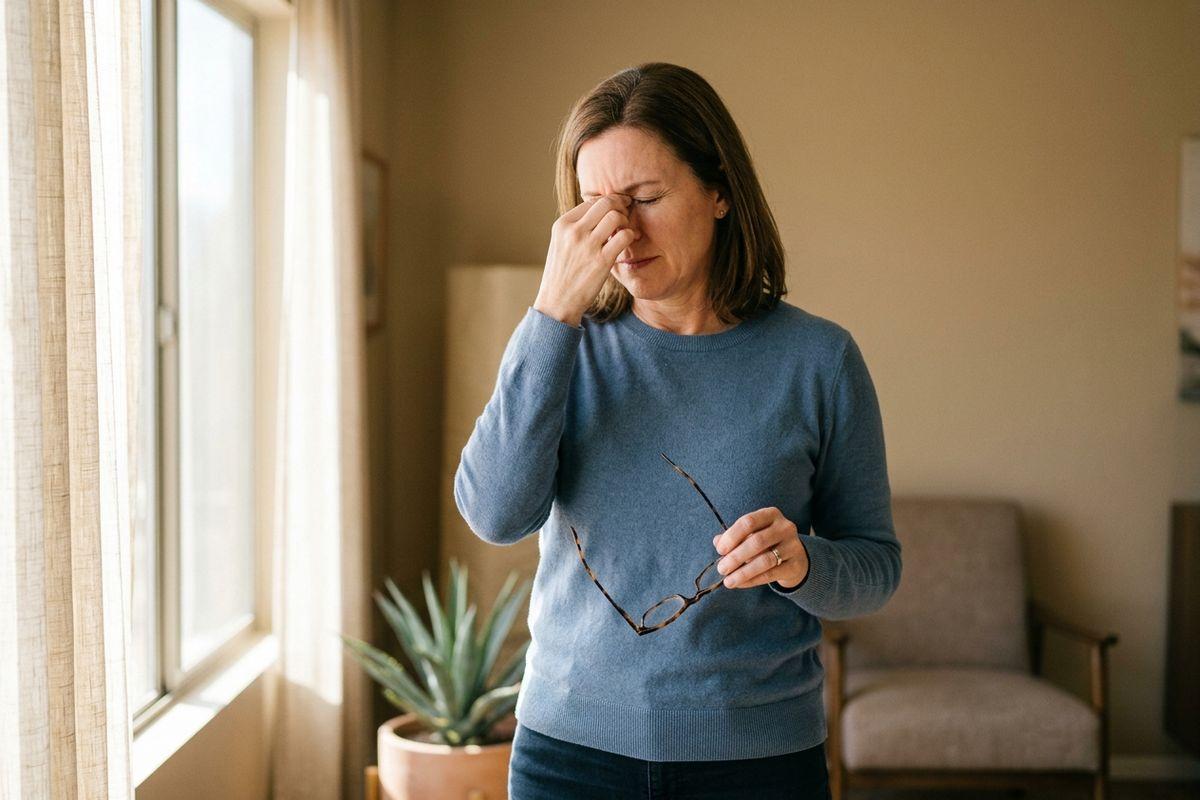
Leaving your glasses on the nightstand won’t change the shape of your eye or hurt anything inside it. Your eyes just work harder to pull things into focus, and after a few hours you feel it.
Think about reading a screen with the brightness turned way down. You can still see. It’s just tiring.
Signs Your Eyes Are Working Too Hard
These usually show up after a stretch of reading, driving, or screen work. Keep an eye out for:
- A headache across your forehead or temples.
- Squinting to make things look sharper.
- Sore, heavy eyes late in the day.
- Trouble keeping your place on a page.
- Dry or irritated eyes.
Why Your Vision Seems Worse Without Glasses
Once you wear glasses every day, your brain gets used to a sharp, clear picture.
Take them off, and the blur may feel stronger than it did before you ever had a prescription. Your brain simply has something better to compare it to now.
Your vision without correction is about the same as it was last month. You just notice the difference more. And no, glasses aren’t making your vision worse either. Wearing them won’t make your eyes lazy or dependent on the lenses.
Why Kids Need Consistent Glasses Wear
Young eyes are still developing, and so is the part of the brain that makes sense of what they see. Both need clear images to grow the right way.
A child who doesn’t wear their glasses might have a hard time reading the board or lose focus during homework. Sometimes nobody realizes vision is behind it.
Conditions That Need Consistent Wear
A few eye conditions rely on consistent glasses use to improve. These include:
- Amblyopia, or lazy eye, where one eye is weaker, and the stronger one does most of the work.
- Strabismus, or crossed eyes, where the eyes don’t point in the same direction.
- Astigmatism in young children, which can slow visual development when it goes uncorrected.
What Really Changes Your Vision Over Time
Your eyesight changes for reasons that have little to do with what you did yesterday. Aging is a big one. The lens inside your eye gets less flexible with time, which is why so many people pick up reading glasses in their 40s and 50s.
Long hours on a screen and poor lighting play a part too. So do health conditions like diabetes, which can affect the small blood vessels at the back of your eye.
Habits That Help Your Eyes
A few small things can keep your eyes comfortable day to day:
- Every 20 minutes on a screen, look at something 20 feet away for 20 seconds.
- Blink often while you read, since screens tend to slow your blink rate down.
- Eat plenty of leafy greens, fish, and colorful vegetables.
- Wear sunglasses that block UV rays when you’re outside.
- Book a routine eye exam once a year, or sooner if your vision changes.
Ready to See Clearly Again?
Wear your glasses because they make your day easier, not because you’re worried about doing damage without them. And if your current pair isn’t cutting it anymore, that’s worth looking into.
Bring your questions to Dr. Brett Balocca at Eye On Health and get a straight answer about your own eyes. Book your exam today.