



Key Takeaways
- Myopia affects the shape of the eye, and those physical changes are permanent.
- Blurry distance vision can be corrected with glasses, contacts, or surgery.
- Myopia management can help slow how fast myopia progresses, especially in kids.
- Stronger myopia raises the risk of certain eye health concerns later in life.
- Regular eye exams help track changes and adjust care over time.
Myopia Is Permanent
Myopia itself cannot be reversed, though it can be managed in children. Blurry distance vision, however, can be corrected with glasses or contacts.
If your child is showing signs of myopia, our team at Eye On Health can help you slow down the condition’s progression.
What Myopia Is
Myopia occurs when the eye grows too long from front to back or when the cornea curves too steeply. This causes light to land in front of your retina (a tissue at the back of your eye that sends signals to your brain), which in turn causes blurry distance vision.
Myopia tends to appear during childhood.
Common Signs to Watch For In Children
Children often don’t realize that they even have vision problems, so the best way to identify myopia is often to observe their behavior. Look for:
- Squinting to see distant objects like a TV or whiteboard
- Sitting very close to screens or holding books near the face
- Tired eyes or headaches after school or screen time
Can Myopia Be Reversed?
Once a person’s eye grows too long, this change is permanent, meaning that myopia can’t be reversed. However, myopia can be managed in children in order to slow down the rate at which it progresses.
In both children and adults, blurry distance vision can be corrected with glasses or contact lenses. But this doesn’t affect the shape of the eye.
Laser Surgery
Laser procedures like LASIK reshape the cornea, the front surface of the eye. This changes how your eyes focus light, reducing or removing your need for glasses.
However, the overall length of the eye remains the same, so laser surgery doesn’t change a person’s underlying myopia or the health considerations that come with it.
Why Myopia Matters for Long-Term Eye Health
Myopia can involve more than blurry vision. In fact, high myopia increases a person’s risk of developing more serious eye conditions later in life. These include:
- Retinal detachment, where the light-sensing layer pulls away from the back of the eye
- Glaucoma, which affects the optic nerve
- Cataracts and changes to the macula, the part of the eye you use for sharp central vision
This is part of why early management of myopia in children is so important.
Does Myopia Stop With Age?
For most people, myopia stops progressing by the early 20s, once the eyes finish growing.
Ways to Slow Myopia Progression
There are several ways to slow the progression of myopia in children:
- Ortho-k lenses, which are worn overnight to gently reshape the cornea while a child sleeps.
- Myopia control glasses or contact lenses, which are designed to slow elongation of the eye.
- Low-dose atropine drops, which are used nightly to reduce how fast myopia progresses.
Reducing Children’s Risk of Developing Myopia
There are a few ways to decrease a child’s risk of developing myopia:
- Limit the time they spend in front of devices.
- Have them spend more time outside, as natural light supports healthy eye development
- Limit the amount of time they spend doing near work
How Regular Eye Exams Support Your Vision
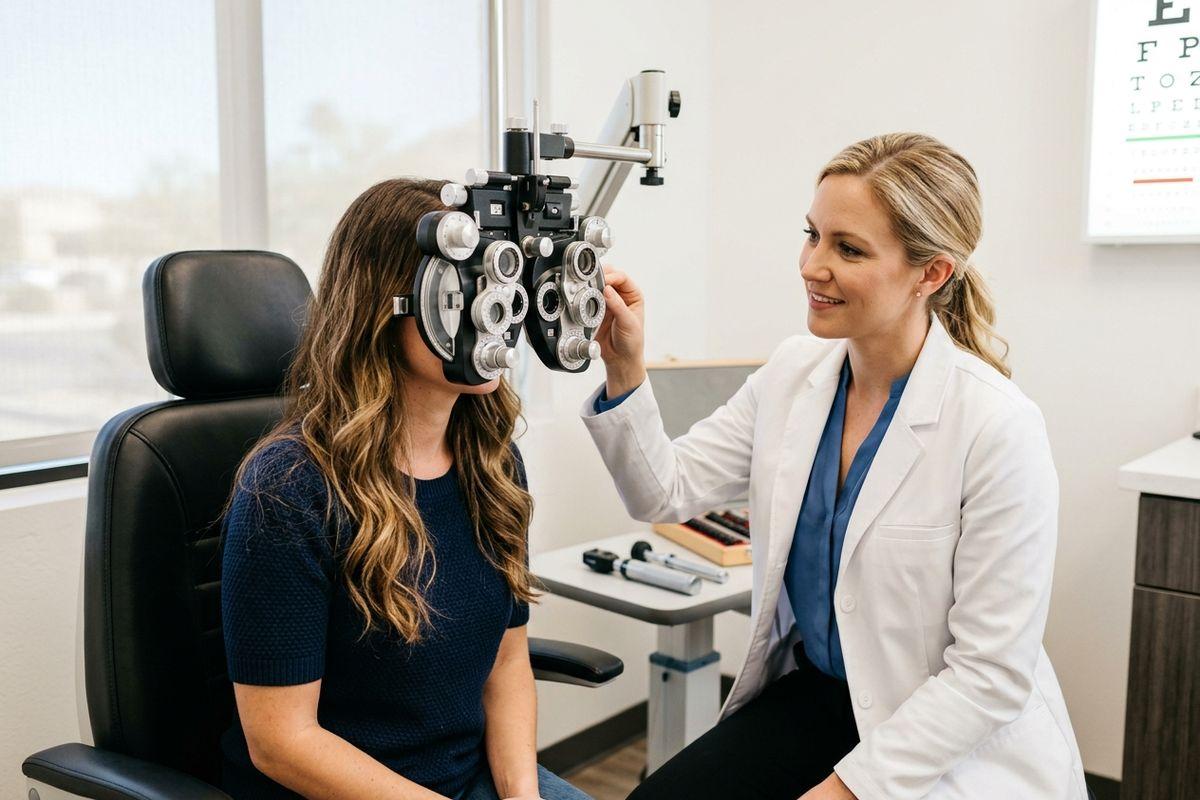
Growing eyes change quickly, so annual exams help you stay ahead of changes in your child’s vision. During these appointments, we can check your child’s prescription, measure and track their eye growth over time, and adjust their treatment plan as needed.
Based on your child’s eyes, lifestyle, and screen habits, we’ll recommend a myopia management plan that adapts and grows as they do.
Protect Your Child’s Future Vision
At Eye On Health in Phoenix, Dr. Brett Balocca takes the time to explain what your family’s eyes need and why. Schedule an exam today, and take the next step toward clearer, healthier vision.