


Key Takeaways
- A vision screening and a comprehensive eye exam are not the same thing.
- Comprehensive exams do more than check how clearly you see; they also look at the general health of your eyes.
- Dilation is common, but not always required, thanks to modern imaging options.
- How often you need an exam depends on your age and health history.
- After your exam, you leave with clear answers, not just a prescription.
More Than Just Reading a Chart
You’ve probably read the letters off a wall chart at a school nurse’s office or a walk-in clinic. This might feel like an “eye exam”, but it actually only scratches the surface. A quick screening of your visual clarity can miss a lot of what’s happening inside your eyes.
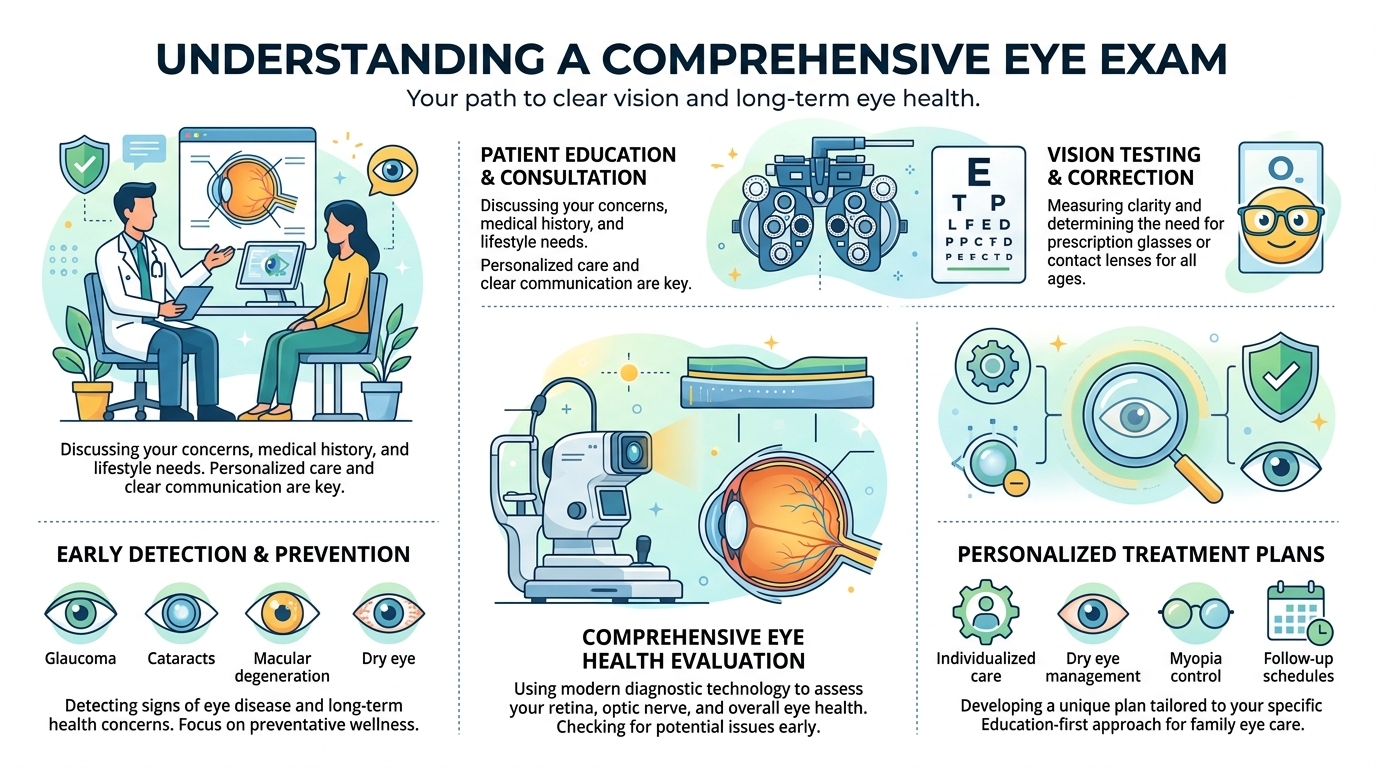
A comprehensive eye exam is a full evaluation of both your vision and the health of your eyes. These exams are performed by a licensed optometrist, and they cover everything from eye pressure to the condition of your retina. At Eye On Health in Phoenix, we offer comprehensive eye exams designed to give you a complete picture of your ocular health.
Comprehensive Eye Exam vs. Vision Screening
A vision screening measures how clearly you can see. It doesn’t look at your eye pressure, your retina, or early signs of conditions like glaucoma or macular degeneration. Passing a screening doesn’t mean that your eyes are actually healthy.
A comprehensive eye exam, on the other hand, checks how your eyes focus, how they work together, and what’s happening inside them. Only a licensed optometrist can perform this kind of thorough evaluation. The American Optometric Association notes that comprehensive eye exams can detect over 270 health conditions beyond vision alone, making them far more valuable than a basic screening.
What Happens During a Comprehensive Eye Exam
Your Health History
The exam starts with a conversation. Your eye doctor asks about any symptoms you’ve noticed, medications you take, and whether eye conditions run in your family. This context helps shape the process that follows.
Eye Health Tests & Evaluations
A glaucoma screening checks the pressure inside your eyes. Glaucoma often has no early symptoms, so regular checkups are important for protecting your vision. You can learn more about how glaucoma is diagnosed and treated to understand why catching it early makes such a difference.
Your optometrist will also evaluate how your eyes track movement, distinguish colors, and take in your peripheral field of view. In some cases, your optometrist may recommend dilation or imaging in order to get a closer look at the retina and optic nerve at the back of your eye.
Optical coherence tomography (OCT) is a non-invasive imaging tool that captures detailed cross-section pictures of the retina to help detect conditions like macular degeneration and diabetic eye disease.
Dilation, Imaging, and Your Prescription
Dilation During the Exam
Dilation is a common part of a comprehensive exam, but it’s not required for every patient. Dilation involves using eye drops to widen the pupils so that your eye doctor can see more of the eye’s interior. Your vision may be blurry for a few hours afterward, so it’s a good idea to bring sunglasses and arrange a ride home if possible.
Some practices use retinal imaging technology as an alternative to dilation drops. Imaging can be just as thorough and more comfortable for patients who prefer to skip the drops.

Getting Your Prescription
Refraction testing helps your optometrist determine whether you need corrective lenses and exactly how strong they should be. You’ll look through a series of lenses and compare which ones make things clearer. The results cover nearsightedness, farsightedness, and astigmatism.
If you already wear glasses or contacts, this part of the exam checks whether your current prescription still fits your needs. Vision can shift gradually, and an updated prescription makes a noticeable difference in your daily comfort. If contacts are part of your routine, feel free to explore the contact lens options available for a range of vision needs and eye conditions.
How Often You Need a Comprehensive Eye Exam
Adults & Seniors
For adults between 18 and 64, an annual comprehensive exam is the best way to stay on top of your eye health. This is especially important if you have diabetes, a family history of eye disease, or wear contact lenses. You can get a closer look at how often eye exams are recommended based on your specific situation.
Once you reach 65, keeping up with yearly exams becomes even more critical. The risk for conditions like cataracts, glaucoma, and macular degeneration increases with age, and regular monitoring helps catch changes early. A routine exam for the whole family is one of the simplest ways to stay ahead of these conditions together.
Children & At-Risk Patients
A child’s first eye exam is recommended between 6 and 12 months old. Vision plays a huge role in how children learn and develop, so early detection of potential issues gives children a real advantage before school starts. Our pediatric eye exam page walks you through what to expect at each stage of your child’s development.
Once a child enters school, annual exams help track how their vision changes year-to-year. For children with diabetes, a strong family history of eye conditions, or those already wearing glasses, more frequent visits give the doctor a closer look at how things are progressing. The American Optometric Association outlines vision development milestones that can help parents know what to watch for from birth through early childhood.
What to Expect After Your Exam
Once your eye exam wraps up, your optometrist will walk you through their findings in plain language. You’ll know exactly what was found, what it means, and what steps, if any, make sense moving forward.
If you need corrective lenses, you’ll receive a prescription for glasses or contacts. If dilation was part of your visit, give yourself some time before driving, as your vision may stay sensitive to light for a couple of hours.
At Eye On Health in Phoenix, our comprehensive eye exams are designed to give you a clear, complete look at your eye health, not just a quick check. Schedule your appointment today and take a fuller look at what’s going on with your vision.